

- Home
- Message from the President
Message from the President
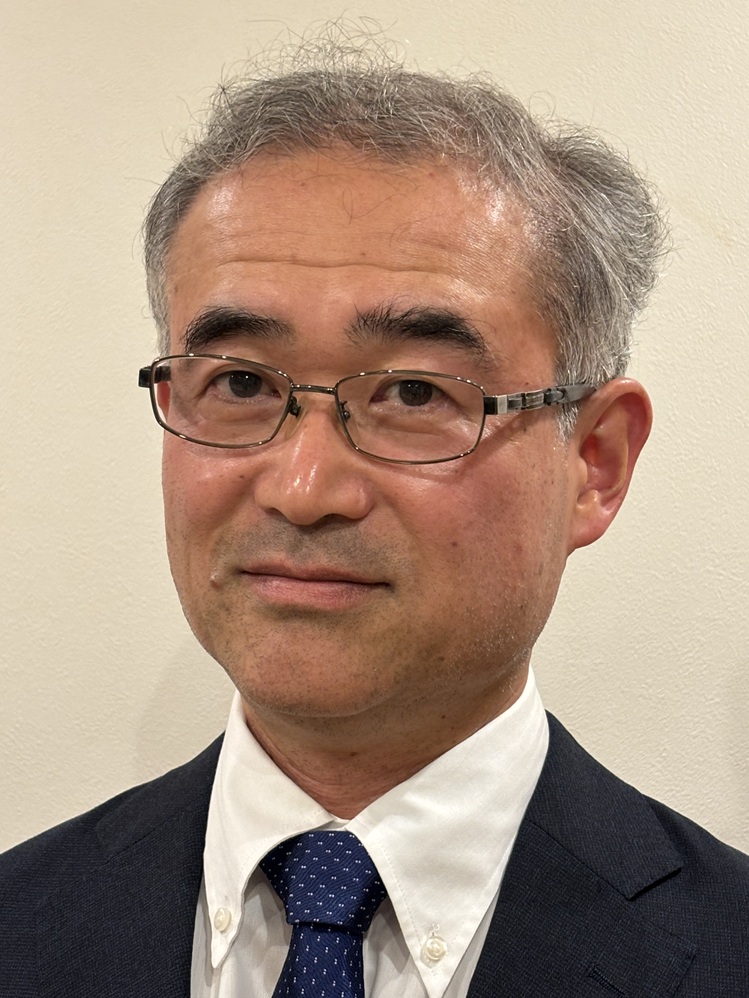 Yoshitada Morikawa, President
Phenomena occurring at surfaces and interfaces, such as chemical reactions and electron transfer processes, play crucial roles in many aspects of modern society. Examples include electronic devices and batteries used in mobile electronics, heterogeneous catalysts employed in chemical synthesis, solar cells that generate renewable energy essential for realizing a carbon-neutral society, wear and friction at the sliding interfaces of automobiles and machinery, corrosion protection technologies that prevent the degradation of metals, and adhesive technologies that join dissimilar materials. The list of applications is virtually endless.
Surface science and vacuum science have developed with the aim of establishing a fundamental understanding of these surface and interfacial phenomena. By creating atomically well-defined and ultraclean solid surfaces under ultra-high-vacuum conditions, introducing atoms and molecules onto these surfaces, and probing the resulting electronic and atomic processes with unprecedented precision, researchers have been able to explore the fundamental nature of matter at surfaces. Through such sophisticated investigations of idealized surfaces, surface and vacuum science has greatly advanced our quantum-mechanical understanding of surface and interface phenomena.
At the same time, although surface and vacuum science originally developed with the goal of understanding technologically important surface phenomena from a fundamental perspective, a substantial gap has often existed between the knowledge obtained from ideal surfaces under ultra-high vacuum and the phenomena that occur on real surfaces exposed to practical environments, where a variety of molecules are adsorbed and complex structures and compositions are present. This challenge, commonly known as the pressure gap and the materials gap, has long been recognized as one of the central issues in surface and vacuum science.
Considerable efforts have been devoted to overcoming these challenges. On the experimental side, operando measurement techniques have advanced rapidly, enabling the in situ observation of surfaces while devices and catalysts are operating under realistic conditions. On the theoretical side, multiscale computational approaches combining highly accurate electronic structure calculations with artificial intelligence technologies, including machine learning, have made remarkable progress. As a result, these gaps are gradually being bridged, creating exciting opportunities to directly connect fundamental scientific knowledge with practical applications.
Bridging fundamental science and real-world applications while continuing to deepen our scientific understanding is a defining mission of the Japan Society of Vacuum and Surface Science. I believe that further promoting and strengthening these activities is essential for the future development of our field. At the same time, there is a matter of concern that must be addressed if we are to further enhance these efforts: the declining international competitiveness of Japanese research. This issue arises from a variety of factors and cannot be resolved by the activities of a single academic society alone. Nevertheless, as part of a possible solution, our society has been placing increasing emphasis on internationalization in recent years. The number of international researchers and students in Japan continues to grow steadily. To provide them with greater opportunities to present their research and to encourage their active participation in discussions of presentations by Japanese researchers, we have adopted English as the language for conference presentations and abstracts. Furthermore, while collaboration with Europe and North America remains critically important, we believe that strengthening partnerships with Asia, a region that has experienced remarkable economic growth in recent years, is equally important from the perspective of future academic and industrial development.
Together with all of our members, I look forward to working toward the continued advancement of the Japan Society of Vacuum and Surface Science so that it may make ever greater contributions to scientific progress and industrial innovation.
Thank you for your continued support and cooperation.


Last Update: 2026-11-10 06:06
The Japan Society of Vacuum and Surface Science
5F Ishikawa bldg. 5-25-16 Hongo, Bunkyo-ku, Tokyo, JAPAN 113-0033
Phone: +81-3-3812-0266 FAX: +81-3-3812-2897 Email: